Replay and the time loop plot device
A book called “Replay”, with the tag line “What if you could live your life over again?” and, depending on the version, a cover image that shows several identical images of a man’s face. What goes through your head when you think of this? Words like “what a fascinating concept”, perhaps? Do you think this book could hold any surprises for you? No?
The time loop is such a common trope now, I’m sure you can name at least three examples without stopping to think. After I recently finished “Replay” by Ken Grimwood, I was more surprised when I read the Wikipedia article and found out the book won the 1988 World Fantasy Award for best novel. It was seen as a precursor to 1993’s movie “Groundhog Day”.
There are older examples of (vaguely) time loop stories, for example the Japanese 60s novel “The Girl Who Leapt Through Time”, which you can still find easily in a Book-Off even today. But it appears (again, according to Wikipedia…) that Replay pioneered the time loop as a literary device for self-exploration. Like in Groundhog Day there’s no time machine or other explained mechanism. It just happens, and the protagonist will grow and come to some kind of realization through it. That’s the basic cookie cutter. It was still fresh when Replay released in 1988.
Changing the topic for a moment, one thing you DON’T hear in a zombie movie is someone yelling “it’s zombies, just like in a movie!” This is called genre blindness. In the fictional world there were never any zombie media. The characters are not only surprised and blindsided by a walking corpse, they don’t even have anything to compare it to. This makes sense because zombies are a literary device that forces the disintegration of regular society and creates a sort of focused and atavistic “mini-society” (and also conventiently stupid fodder enemies in video games). Zombies are useful to examine social topics.
Time loops, by contrast, focus more on the inner lives of the person or people stuck in them. And I find it notable that characters in these stories seem to be less genre blind than the zombie survivor. For example in the 2022 movie “Mondays” a group of office workers, after realizing what’s happening, come to the conclusion that the loop’s central figure must be their boss (who is still unaware of the loop) and try to help him have the epiphany needed to break the loop. In 2023s “River” some similar thoughts go through the protagonists head. It’s not a fourth wall break, but the characters seem to be aware that what’s happening can also be a plot device in fiction.
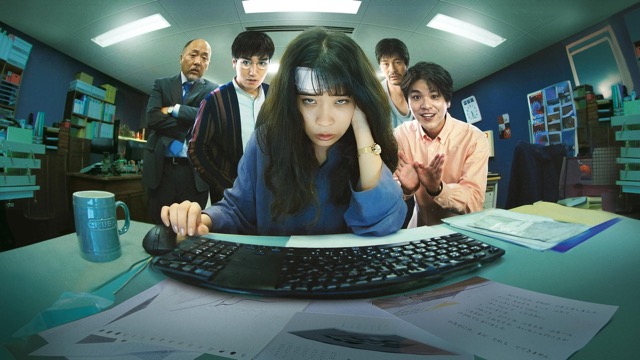
Still, neither “Mondays” nor “River” are exactly a deconstruction or subversion of the trope. They follow it, but with a couple of spins here and there to make it worthwhile, even after so many time loop stories. Most of all, they both have a likeable cast of characters. “Mondays”, being set in an office, unsurprisingly satirizes work culture and office life. “River” is set in a rural ryokan and each iteration of the loop is an unbroken long shot. The location is beautiful, and by the end of the movie you’ll be familiar with how each of the buildings and rooms connects to the rest of them, thanks to the camera moving through the corridors and following the characters as they run around while trying to make sense of what’s happening. The whole movie is just cute and feels like a mini-vacation. By which I mean to say both of these movies have their appeal, even if you don’t find the time loop trope particularly interesting.
I know, it’s unfair to compare a book from 1988 to movies from the 2020’s. Apples and oranges. Still, I found something missing from Replay that would have made me interested beyond the loop concept. The book spends half its pages detailing the first few “replays” of the protagonists and his exploits. The things you and I would probably also do if we had advance knowledge about the stock market. It jumps forward years at a time. The protagonist’s main woe throughout most of the book is that each reset he will lose all social connections and family. This also means that we, the readers, don’t get much to latch onto. The protagonist eventually becomes disinterested and indifferent for a long stretch of the book, and for better or worse those feelings reflected in me as I read.
Before I end it, I’d like to bring up “The 22 Murders of Madison May” by Max Barry. While it’s not strictly a “time loop” book, it shares a few concepts. Like Replay, it introduces and discards situations and people several times throughout its length. Again, it’s a 1988 vs 2021 situation. The society 23MoMM takes place in is obviously much closer to my own and thus more easily relatable. Ah, but the prose feels so much more fun to read thanks to it’s humor and pacing, and a lot of tiny details that make me emphatize with characters and situations.
Anyways, I can only recommend you to give all the books and movies I touched on a try, if you can find them.